What Happens If Your Aligner Supplier Can’t Scale With You? Red Flags to Watch For Early
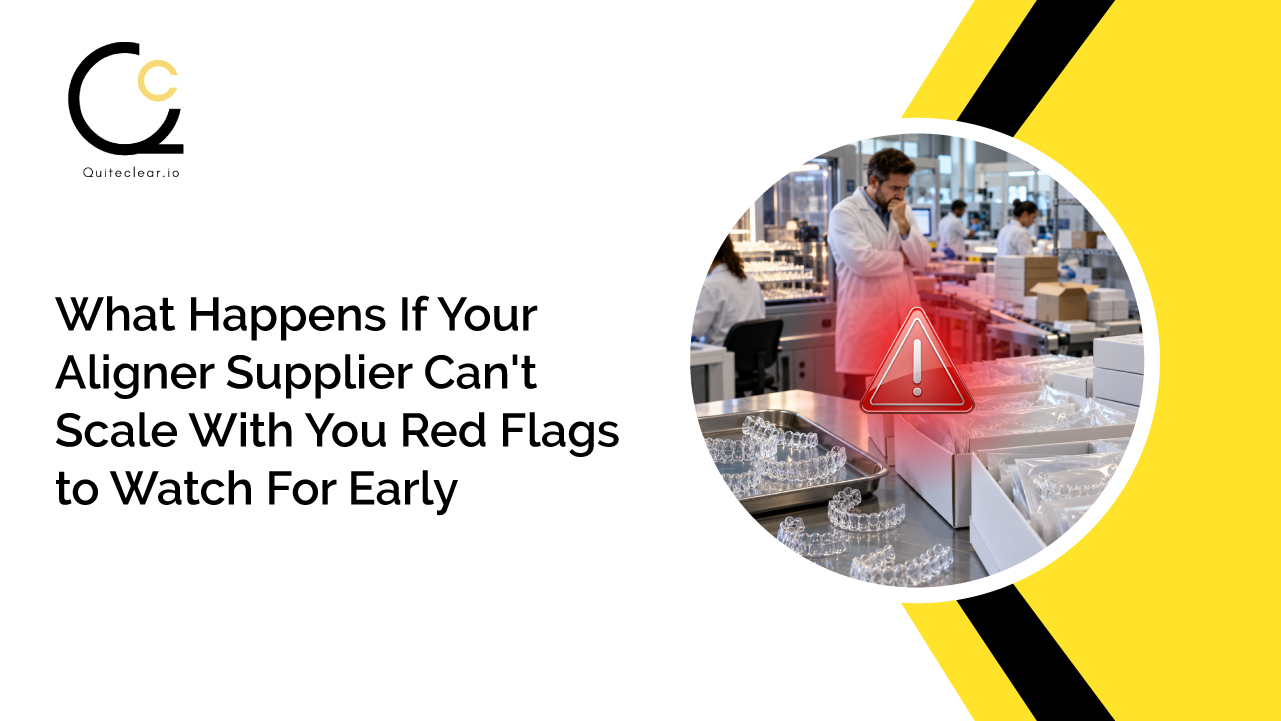
Imagine your clear aligner business has just landed a major order. Patient demand is increasing, your production team is ready, and your business is finally moving into its next phase of growth. But there’s one problem: your aligner supplier can’t keep up.
Orders are delayed. Material availability becomes unpredictable. Quality starts varying between batches. Suddenly, the growth you worked so hard to achieve feels like a constant exercise in damage control.
This is what happens when your supplier grows slower than your business.
In clear aligner manufacturing, choosing the right supplier is about more than finding materials at a competitive price. You need a partner who can support increasing production volumes, maintain consistent quality, and deliver on time as your requirements evolve.
The good news? Supplier scalability issues rarely appear overnight. Recognizing the warning signs early can help you avoid costly disruptions and make better decisions before they affect your operations.
What Does It Mean for an Aligner Supplier to Scale With Your Business?
A supplier who can support your growth should be able to handle increasing demand without compromising quality, delivery timelines, or service.
For example, a supplier who comfortably handles 500 orders a month might struggle when your requirements increase to 1,500. The real question isn’t whether they can fulfill a larger order once. It’s whether they can do it consistently. A scalable aligner supplier should offer:
- Reliable production capacity: The ability to accommodate higher order volumes as your business expands.
- Consistent quality: Materials and components that meet the same specifications across batches.
- Dependable delivery: Predictable lead times, even during periods of high demand.
- Flexible operations: The ability to adapt to changing specifications, new products, and evolving requirements.
- Transparent communication: Clear updates about inventory, production schedules, and potential disruptions.
When these capabilities are missing, even a supplier who initially seemed like the perfect fit can become a bottleneck.
7 Red Flags That Your Aligner Supplier Can’t Scale With You
- Delivery Delays Are Becoming a Pattern: An occasional delay can happen to any supplier. But when every increase in your order volume leads to another missed deadline, it’s worth paying attention.
Perhaps your supplier initially delivered materials within five days. Now, as your requirements increase, deliveries take two weeks or longer. You find yourself following up repeatedly, adjusting production schedules, and explaining delays to your own customers.
The problem isn’t simply the delay. It’s the lack of predictability.
What to watch for: Repeatedly extended lead times, missed delivery commitments, vague explanations, and no clear plan to prevent future disruptions.
A supplier who can scale should communicate capacity constraints early and provide realistic delivery estimates instead of making promises they cannot keep.
- Product Quality Changes as Order Volumes Increase: Consistency is essential in clear aligner manufacturing. Materials must meet the specifications required for the intended manufacturing process and finished product.
But what happens when your supplier handles larger orders by stretching its production capabilities or struggling to maintain the same quality controls?
You may start noticing differences between batches, more rejected materials, or an increase in production-related defects.
These issues can lead to additional inspections, rework, material wastage, and unnecessary pressure on your team.
What to watch for: More frequent quality complaints, inconsistent material specifications, increased rejection rates, or missing quality documentation.
Ask your supplier how quality is monitored as production volumes increase. A dependable partner should have documented quality-control procedures that remain effective as output grows.
- Your Supplier Has No Clear Plan for Increasing Capacity: Ask your supplier a simple question: “What happens if our order volume doubles over the next six months?”
If the answer is vague, you’ve uncovered a potential risk.
A supplier may be perfectly capable of meeting your current requirements but lack the equipment, workforce, inventory, or production planning needed to handle future demand.
This becomes especially challenging when your business experiences seasonal peaks, signs larger clients, or expands into new markets.
What to watch for: No clear capacity estimates, frequent production backlogs, limited inventory planning, or an inability to explain how additional demand would be managed.
You don’t necessarily need a supplier with unlimited capacity. You need one who understands their limitations and has a realistic plan for supporting your growth.
- Communication Gets Worse When Things Get Busy: Communication is easy when everything runs smoothly. The real test comes when orders increase or something goes wrong.
Does your supplier proactively inform you about material shortages? Do they explain delivery changes before they disrupt production? Can you reach someone who understands your requirements when an urgent issue arises?
If getting a simple update requires several calls and emails, scaling the relationship could become frustrating.
Poor communication also makes it harder to plan inventory, allocate production resources, and manage customer expectations.
What to watch for: Unanswered messages, inconsistent updates, unclear commitments, and problems that surface only after deadlines have passed.
A reliable supplier should treat communication as part of the service, not an afterthought.
- They Cannot Adapt to Your Changing Requirements: Growth rarely means doing exactly the same thing at a larger scale.
As your aligner business evolves, you may introduce new products, change material specifications, improve manufacturing workflows, or need different order quantities.
A supplier who resists every change can limit your ability to innovate.
What to watch for: Limited customization, inflexible minimum order quantities, slow responses to technical queries, or an inability to support new requirements.
Look for a supplier who is willing to understand your evolving needs and assess whether they can support them realistically.
- Quality Control and Documentation Are Not Keeping Up: As production expands, informal processes become harder to manage. What worked for small orders may not be sufficient for larger, more complex operations.
Without robust quality systems, suppliers may struggle with batch traceability, inspection records, documentation, and consistent handling of quality-related complaints.
This can create difficulties when you need to investigate a defect, verify material specifications, or demonstrate that your supply process meets applicable requirements.
What to watch for: Missing batch records, incomplete specifications, unclear inspection procedures, or difficulty tracing materials to their source.
Before increasing your dependence on a supplier, verify that its documentation and quality systems are appropriate for your product and regulatory requirements.
- Your Total Costs Keep Increasing: A supplier offering the lowest price can seem like an obvious choice, especially when you’re trying to protect margins.
However, the purchase price tells only part of the story.
Frequent delays may lead to expedited shipping. Inconsistent quality may increase inspection and rejection costs. Unreliable supply may force you to maintain excess inventory or interrupt production.
Even if the supplier’s quoted price stays the same, these additional expenses can make the relationship increasingly expensive.
What to watch for: Unexpected surcharges, frequent emergency orders, rising wastage, replacement costs, and a lack of transparent pricing as volumes increase.
Evaluate the total cost of working with a supplier, not just the amount on the invoice.
What Happens When You Ignore These Warning Signs?
Supplier scalability issues can affect far more than procurement.
- Production bottlenecks: Your team cannot maintain output because essential materials or components are unavailable.
- Rising operational costs: Delays, rework, wastage, and emergency shipments eat into margins.
- Missed commitments: Unpredictable supply makes it harder to maintain reliable delivery schedules.
- Quality concerns: Inconsistent incoming materials can introduce additional risks into your manufacturing process.
- Slower business growth: You may hesitate to accept larger orders or expand because your supply chain cannot support the additional demand.
The biggest risk is becoming dependent on a supplier whose limitations you already recognize but have not addressed.
How to Evaluate an Aligner Supplier Before Scaling
You don’t have to wait for a major disruption to assess whether your supplier is ready for your next stage of growth. Start by asking practical questions:
- Can you handle higher volumes consistently? Discuss current capacity, expected lead times, and how additional demand would be managed.
- How do you maintain quality at scale? Review inspection processes, specifications, batch traceability, and relevant quality documentation.
- What happens during a supply disruption? Understand backup arrangements, inventory planning, and communication procedures.
- Can you support changing requirements? Discuss customization, technical support, and your likely future needs.
- Is the pricing structure sustainable? Clarify volume-based pricing, minimum order quantities, additional charges, and long-term supply terms.
Where possible, validate the supplier through samples, a trial order, documented performance reviews, and a gradual increase in order volumes.
It’s also sensible to periodically review your supplier relationship instead of assuming that a partner who worked well two years ago will automatically meet today’s needs.
Your aligner supplier should support your business growth, not become the reason you have to slow down. Frequent delivery delays, inconsistent quality, limited capacity, poor communication, and rising hidden costs are all signs worth investigating before they affect your operations.
The goal isn’t necessarily to find the biggest supplier. It’s to find one with the right combination of capacity, quality systems, flexibility, and transparency for your business today and tomorrow.
Because sustainable growth isn’t just about producing more aligners. It’s about building a manufacturing process that can handle more demand without creating more problems.
Looking for reliable clear aligner manufacturing solutions? At Quiteclear, we understand the importance of dependable workflows and quality-focused aligner production. Explore how Quiteclear can support your aligner manufacturing needs and help you plan for your next stage of growth.