
Clear Aligner Treatment Trends Every Indian Dentist Should Know in 2026
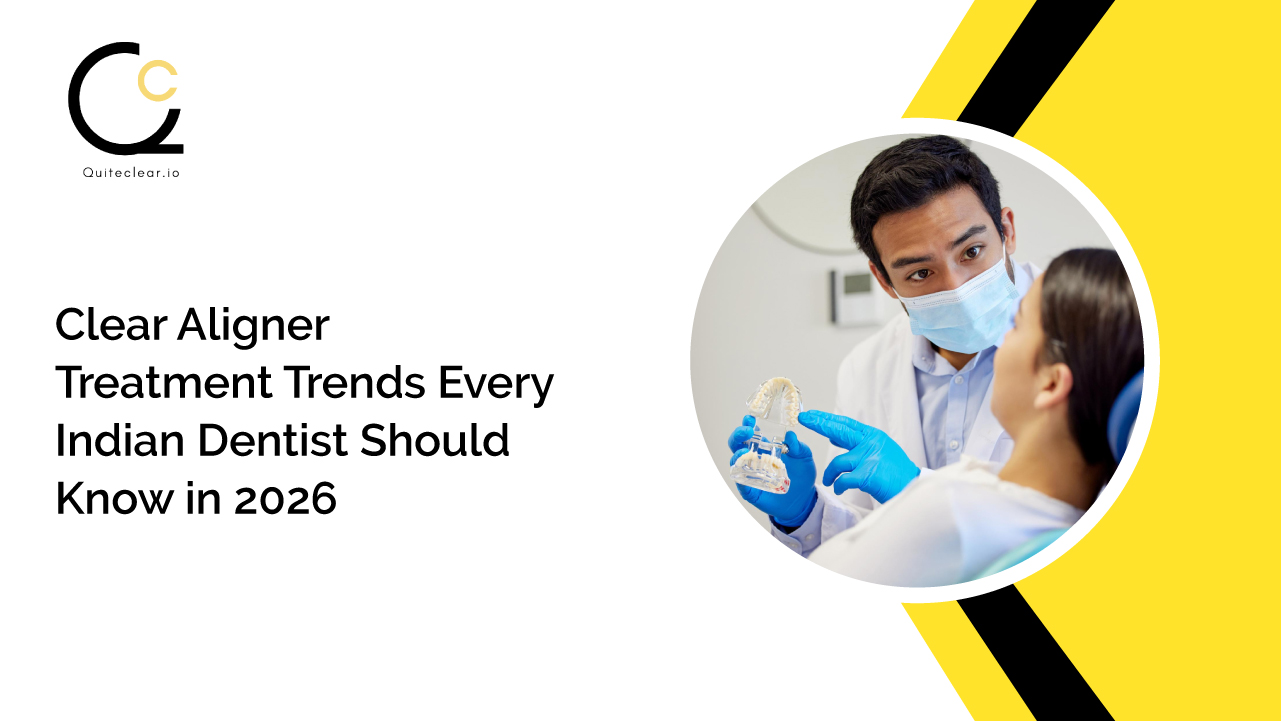
Orthodontics in India is entering a defining phase.
Clear aligner therapy, once seen as an alternative, is now being shaped by artificial intelligence, digital dentistry, and changing patient expectations. By 2026, success with aligners will depend not just on offering the treatment, but on how effectively dentists integrate technology, data, and personalised care into their practice. For Indian dentists, staying informed about these trends is no longer optional. It is essential for clinical precision, patient trust, and practice scalability.
The Indian Clear Aligner Market: A Growth Overview-
India’s clear aligner market is entering a high-growth phase. According to Grand View Research, the market is projected to grow from a few hundred million USD today to over USD 2 billion by 2033–2035, driven by rapid adoption across urban and semi-urban centres. The category is expected to grow at a CAGR of over 30%, making it one of the fastest-expanding segments in Indian dentistry.
Adults currently form the largest share of aligner patients, especially working professionals seeking discreet orthodontic solutions. At the same time, the teen segment is growing the fastest, as parents increasingly prefer aligners for comfort, aesthetics, and better compliance compared to traditional braces.
For Indian dental practices, this growth signals a clear shift. Aligner therapy is no longer optional or niche; it is becoming a core orthodontic offering. Clinics that invest early in aligner expertise, digital workflows, and patient education will be better positioned to attract modern patients, increase case acceptance, and build scalable, future-ready practices.
Trend #1 — AI-Powered Diagnosis & Treatment Planning: AI is transforming clear aligner planning by improving accuracy, predictability, and consistency. Advanced algorithms analyse tooth movement patterns, occlusion, and historical case data to suggest optimized staging and attachments. This results in fewer refinements, more predictable outcomes, and faster case approvals. For clinicians, AI reduces planning time and manual guesswork, enabling efficient treatment delivery while maintaining high clinical standards.
Trend #2 — Digital Dentistry & 3D Scanning Integration: The shift from physical impressions to fully digital workflows is accelerating across Indian practices. Intraoral scanners, 3D imaging, and print-ready digital models are replacing traditional putty impressions. This transition improves accuracy, reduces remakes, and enhances patient comfort. Digitization also shortens chair time and allows seamless collaboration between clinics, labs, and aligner manufacturers, boosting overall operational efficiency.
Trend #3 — Remote Monitoring & Teledentistry: Remote monitoring platforms now allow patients to track aligner progress through at-home scans and mobile apps, reducing the need for frequent in-clinic visits. Dentists can assess compliance, tooth movement, and potential issues remotely. For Indian clinics, this enables hybrid care models; combining in-person expertise with digital follow-ups, improving convenience for patients while optimizing clinical schedules and scalability.
Trend #4 — Personalized & Smart Aligners: Clear aligners are becoming increasingly personalized, moving beyond standard sequencing to incorporate patient-specific biometrics and adaptive materials. Advanced designs aim to deliver more precise force application and improved comfort. Emerging research is also exploring “smart” aligners with embedded sensors that could provide real-time feedback on wear time and movement, pointing toward a more data-driven future of orthodontics.
Trend #5 — Patient Preferences & Aesthetics: Aesthetic considerations are now central to orthodontic decision-making. Both adults and teens increasingly prefer discreet, lifestyle-friendly aligner options over traditional braces. This shift has a direct impact on treatment acceptance rates, case conversions, and patient satisfaction. Practices that clearly communicate aesthetic benefits: comfort, invisibility, and convenience, are more likely to attract modern patients and improve overall treatment uptake.
Trend #6 — Practice Differentiators: DTC & Hybrid Models: Direct-to-consumer aligner models have increased awareness but also highlighted the importance of professional supervision. Clinical oversight remains crucial for accurate diagnosis, patient safety, and optimal long-term outcomes. Indian dentists can differentiate themselves by offering hybrid models, leveraging digital convenience while maintaining in-office evaluations, monitoring, and accountability, ensuring quality care without compromising clinical integrity.
Trend #7 — Materials & Sustainability: Material innovation is driving aligners that are thinner, clearer, more durable, and more comfortable. At the same time, sustainability is emerging as a consideration, with patients becoming more conscious of waste and environmental impact. Manufacturers are exploring recyclable materials and optimized production processes, signaling a gradual shift toward eco-responsible orthodontic solutions aligned with evolving patient expectations.
Challenges & Considerations-
While clear aligner adoption is accelerating, Indian dental practices must navigate a few critical challenges. Cost remains a key barrier, as aligner treatments and digital infrastructure can be perceived as expensive by price-sensitive patients. Clinics often need to invest time in patient education and flexible pricing models to improve affordability and case acceptance.
Training and upskilling are other important considerations. Adopting digital scanners, AI assisted planning tools, and remote monitoring systems requires clinical and operational learning. Without proper training, practices risk underutilizing technology or compromising outcomes.
Finally, managing patient expectations is crucial, especially in complex orthodontic cases. Clear communication around treatment duration, limitations, and compliance ensures trust, satisfaction, and predictable results.
As we move into 2026, clear aligner therapy in India is no longer defined by novelty; it is shaped by technology, patient expectations, and clinical precision. From AI-driven treatment planning and digital workflows to remote monitoring and advanced materials, aligners are redefining how orthodontic care is delivered and experienced.
For Indian dentists, the opportunity lies not just in offering aligners, but in adopting the right systems, skills, and partners to deliver predictable, high-quality outcomes. Staying informed and adapting early will be key to building a modern, scalable, and patient-centric practice.
If you think your practice is ready to start your own branded clear aligner journey, then reach out to Quiteclear, a white-lable clear aligner manufacturer in India to guide you through each stage required to start this journey.